|
|
Welcome:
Dos and Dont’s for Sustainable Advocacy
|
|
|
|
|
Dear Wayfinder,
One of our goals at UU World is to equip you with tools you can use to advocate for justice while taking care of yourself and your community.
Finding a worthwhile cause is the easy part. Nurturing your body, mind, and spirit to keep you going is trickier. Thankfully, Unitarian Universalism gives us opportunities to share wisdom and support each other.
Included with our story about the UUA Organizing Strategy Team’s free toolkit is a downloadable PDF document of recommended Dos and Don’ts for sustainable justice advocacy. It highlights ways to protect your well-being as you fight for a better tomorrow. To make that information more accessible, a text version is also available online. Our forthcoming Fall/Winter 2025 issue of UU World will include a full-page poster that you can cut right out of the magazine!
We hope that ideas like these bring you inspiration, practical skills, and spiritual nourishment. If you have suggestions for other ways we can help, please email world@uua.org.
Here’s what else is in this week’s Wayfinder:
-
UU congregations are eliminating barriers to participation and creating more welcoming cultures for members of all ages, reports Jasmine Vaughn-Hall. Learn what strategies are working!
-
Speaking of welcoming congregations, the UU Fellowship of Paris is a home away from home for many. Beth O’Connell, a UU who moved to France from the United States and is part of that thriving community, shares why.
-
As we mentioned before, OST published a toolkit, “Grounded, Resilient, and Responsible: Responding and Organizing in Authoritarian Times.” Jeff Milchen tell us how it came together and what it includes.
-
Our Moment of Reflection is a reminder from historian Howard Zinn that having hope is “not just foolishly romantic.”
|
|
|
Maryann Batlle
|
|
Maryann Batlle (she/her) is UU World‘s digital editor and a former local journalist. She lives in Florida with her dog, Gabo, and her cat, Luna.
|
|
|
|
Creating Welcoming Cultures at UU Congregations
|
|
|
|
 |
|
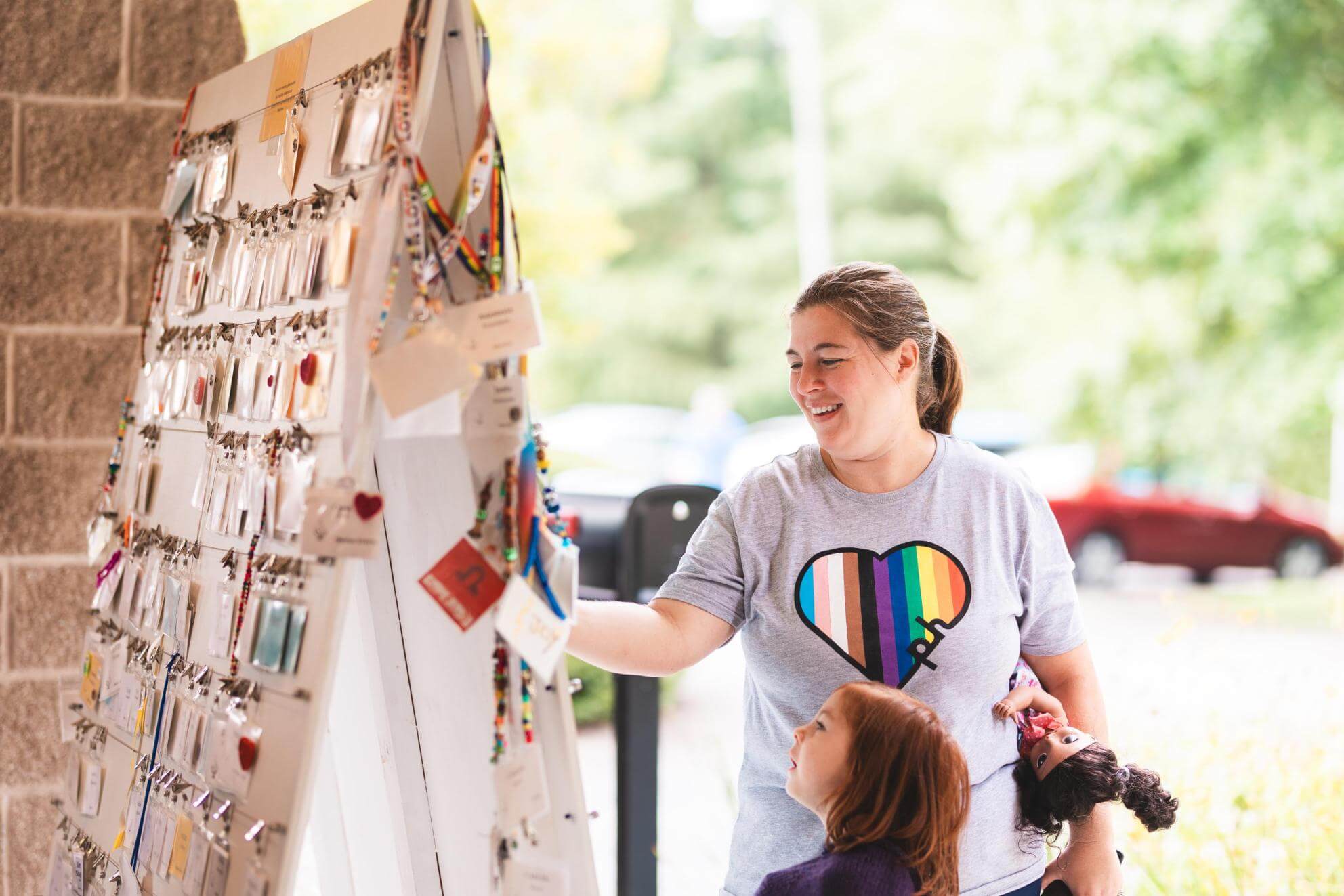
The Unitarian Universalist Church of Greensboro, North Carolina, has implemented changes to support members of all ages. (© Betsy Blake Photography)
|
|
Image Description: A person wearing a shirt with a rainbow pride flag-striped heart on it stands next to a child and takes a nametag off of a rack at a Unitarian Universalist congregation.
|
|
The Unitarian Universalist Church of Greensboro, North Carolina, had all the ingredients to provide a warm, considerate, and inclusive new member experience, but they were struggling to find their ideal recipe for welcoming.
They tried having new member classes on weekdays, but tired parents and professionals found it hard to attend after a long day. They tried compressing the classes into a single jam-packed Saturday session, including icebreakers, a scavenger hunt to familiarize people with the building, and hours of information. The timing wasn’t always convenient for people’s schedules and meant back-to-back days at church if they wanted to come to Sunday worship.
“We had to build more welcoming infrastructure—quality children’s programming and childcare in our budget—so that we could support a religious exploration hour for all ages after worship,” said Rev. Sadie Lansdale.
A year ago, they decided to change the Sunday service time from 11 a.m. to 10 a.m. and break up the new member classes into four modules: Unitarian Universalism and Your Spiritual Journey, Religious Exploration, Faith in Action, and Membership and Church Operations. The classes could be self-paced and taken immediately after nearly every Sunday service. The change was convenient because people were already at church and children could go to programming or the on-site childcare.
The reorganization seems to be working by reducing barriers to participation.
Read the full story at uuworld.org.
|
|
|
Jasmine Vaughn-Hall
|
|
Jasmine Vaughn-Hall (she/her) is a reporter in the Baltimore area who enjoys telling stories about neighborhoods and communities. You can find more of her work at jasminevaughn-hall.com.
|
|
|
|
|
UU Fellowship of Paris Brings People Together
|
 |
|
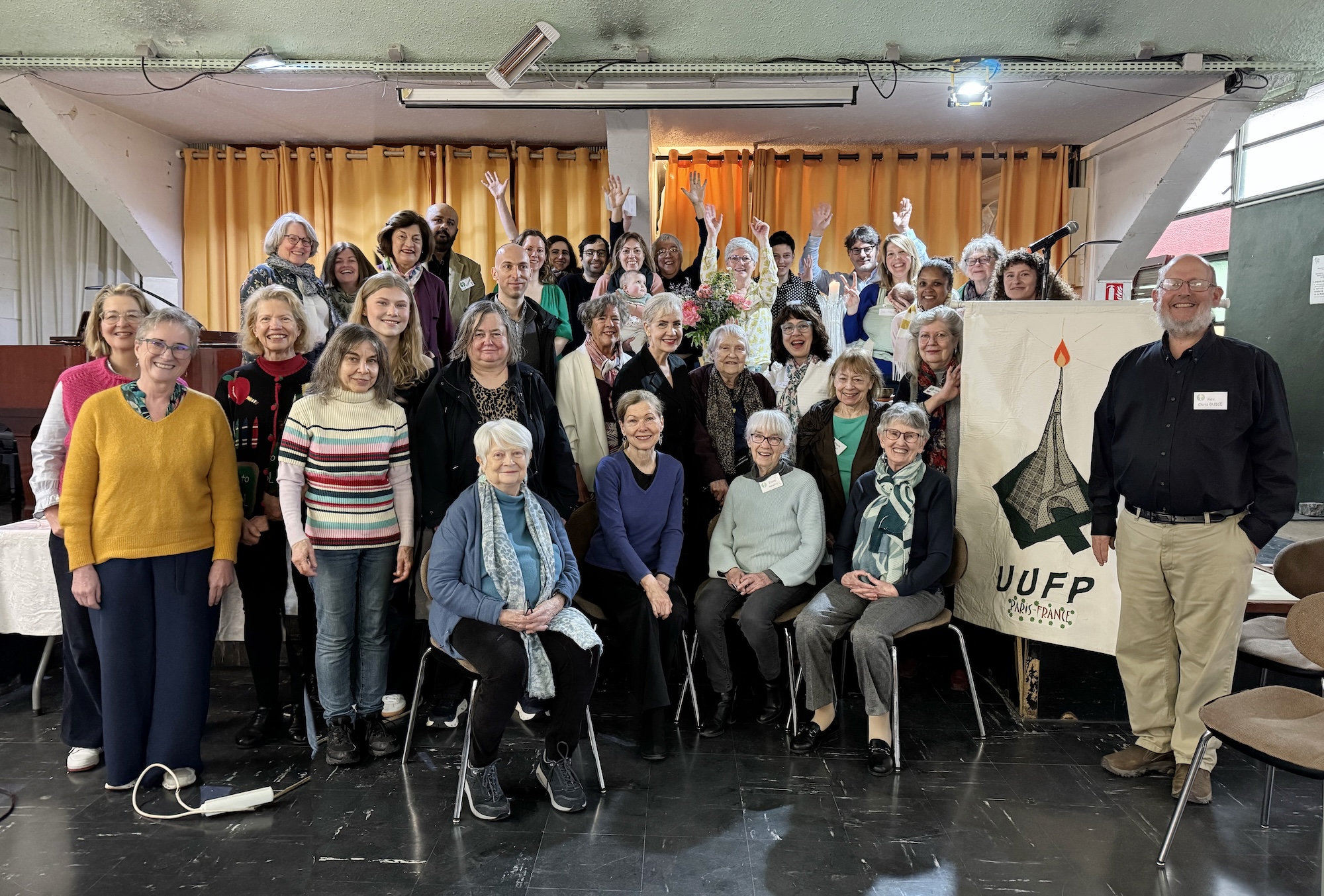
Most attendees at the April 20, 2025, UU Fellowship of Paris service in La Maison Verte, preached by visiting minister Rev. Chris Buice (standing at right). (© Elizabeth Yoakum)
|
|
Image Description: A group of Unitarian Universalists gathered for a photo indoors. Many are smiling. Some in the back row have their arms raised.
|
|
|
|
|
Once a month, on a Sunday morning, Unitarian Universalists pass quietly through a stone-paved courtyard in Paris’s picturesque Montmartre district so as not to disturb the building’s residents living on the upper floors. They follow signs to the door of the small, midcentury modern ground-floor auditorium of La Maison Verte, a Protestant-linked social action center that helps the local immigrant community, which they have rented since 2012.
An early morning crew of volunteers has set up chairs for the congregation of around forty adults and six children who typically show up for the service. On the stage is a piano and a table for an altar with a chalice and flowers; another table holds candles for Joys and Concerns. In the back of the room are coffee and cookies for everyone to enjoy afterwards.
This is the UU Fellowship of Paris, one of four groups outside of the United States and Canada that are official members of the Unitarian Universalist Association. This also includes the Unitarian Church of South Australia in Norwood, Australia; the UU Fellowship of San Miguel de Allende, Mexico; and the UU Church of the Philippines, which itself has twenty-seven congregations, according to Rev. Morgan McLean, the UUA’s director of the Global Connections Office.
The Paris fellowship is also part of the Unitarian Universalists in Europe, a group of eight, mostly English-speaking fellowships in France, Germany, the Netherlands, Belgium, Switzerland, and the Czech Republic, McLean says. There are many more groups who identify as Unitarian, Free Church, or UU; in Europe there are about 335 such fellowships or congregations, with the Hungarian and United Kingdom Unitarians each having over 150 congregations, she adds.
Learn more at uuworld.org.
|
|
|
Beth O’Connell
|
|
Beth O’Connell is a journalist from the United States who found Unitarian Universalism and community abroad with the Paris UU Fellowship.
|
|
|
|
|
Dos and Don’ts: Protect Your Peace While Advocating for Justice
|
|
|
 |
|
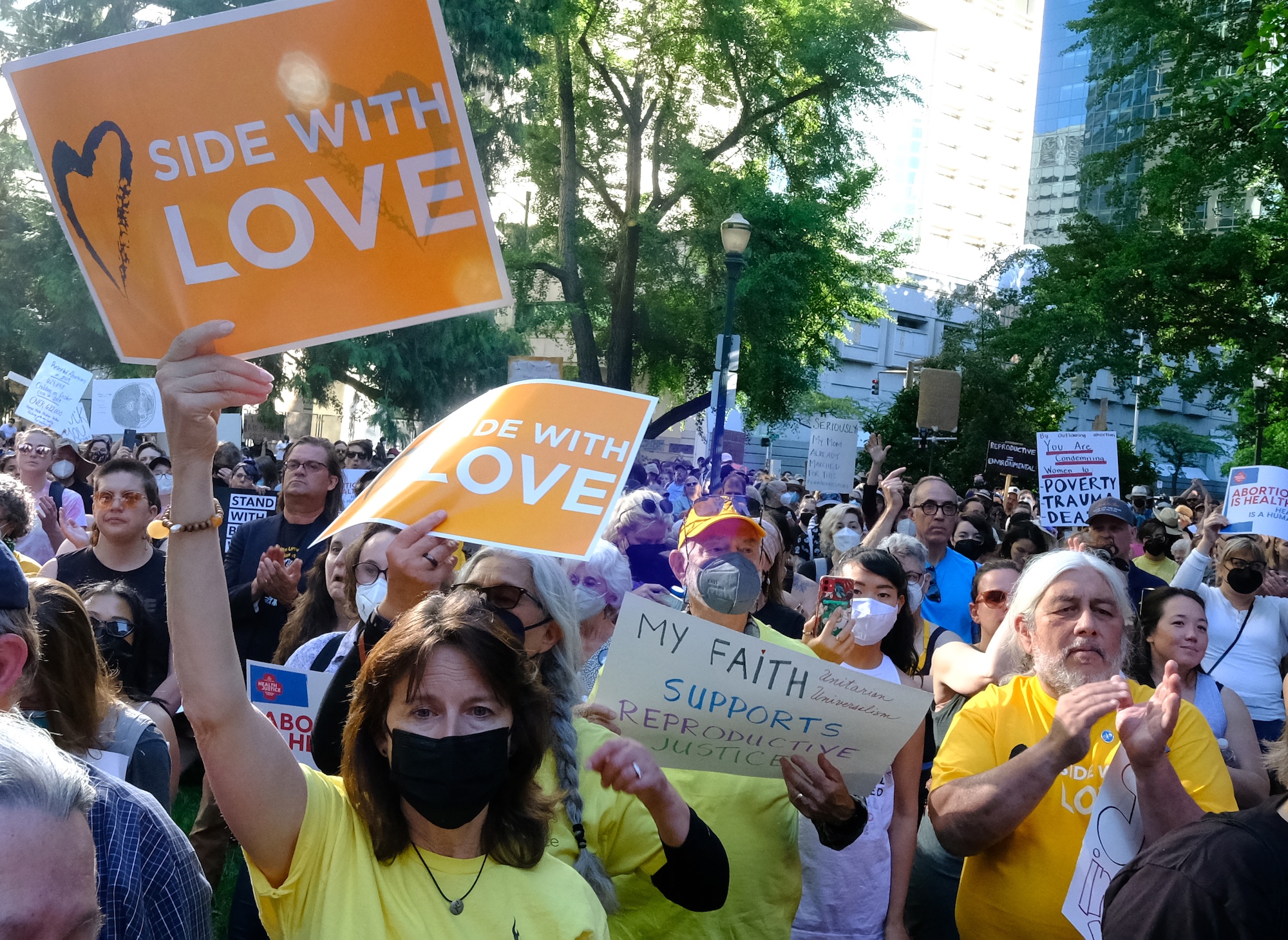
Unitarian Universalists protest the 2022 U.S. Supreme Court ruling overturning Roe v. Wade that ended the federal Constitutional right to abortion. (© Nancy Pierce/UUA)
|
|
Image Description: A large group of protesters—some in yellow “Side With Love” shirts, many holding signs—protest the U.S. Supreme Court ruling that overturned Roe v. Wade.
|
|
As the landscape of U.S. politics and activism rapidly transformed early this year, the Unitarian Universalist Association’s Organizing Strategy Team—the people behind Side With Love and other UU campaigns for justice—fielded inquiries from many UUs and engaged in internal discussions about how to meet the barrage of attacks against democracy and almost every UU justice priority. The discussions provoked in OST included:
-
How are we conveying visions of a world we are working to achieve while defending against existential threats?
-
How can we develop a durable narrative strategy and improve storytelling?
-
How can we teach UUs security practices that have become imperative in the face of repressive government actions?
Nicole Pressley, director of the Organizing Strategy Team, recalls being driven to “help show what accountable, effective, and strategic organizing could look like on this new terrain while providing guidance on handling the increased risks and threats many people were facing.”
Read the story and download the poster at uuworld.org.
|
|
|
Jeff Milchen
|
|
Jeff Milchen is a lifelong advocate for both political and economic democracy and founder of Reclaim Democracy! and the American Independent Business Alliance. A former UUA Justice Communications associate, he writes from Colchester, Vermont.
|
|
|
|
|
|
Moment of Reflection
|
 |
|
(© Getty Images/Unsplash+)
|
|
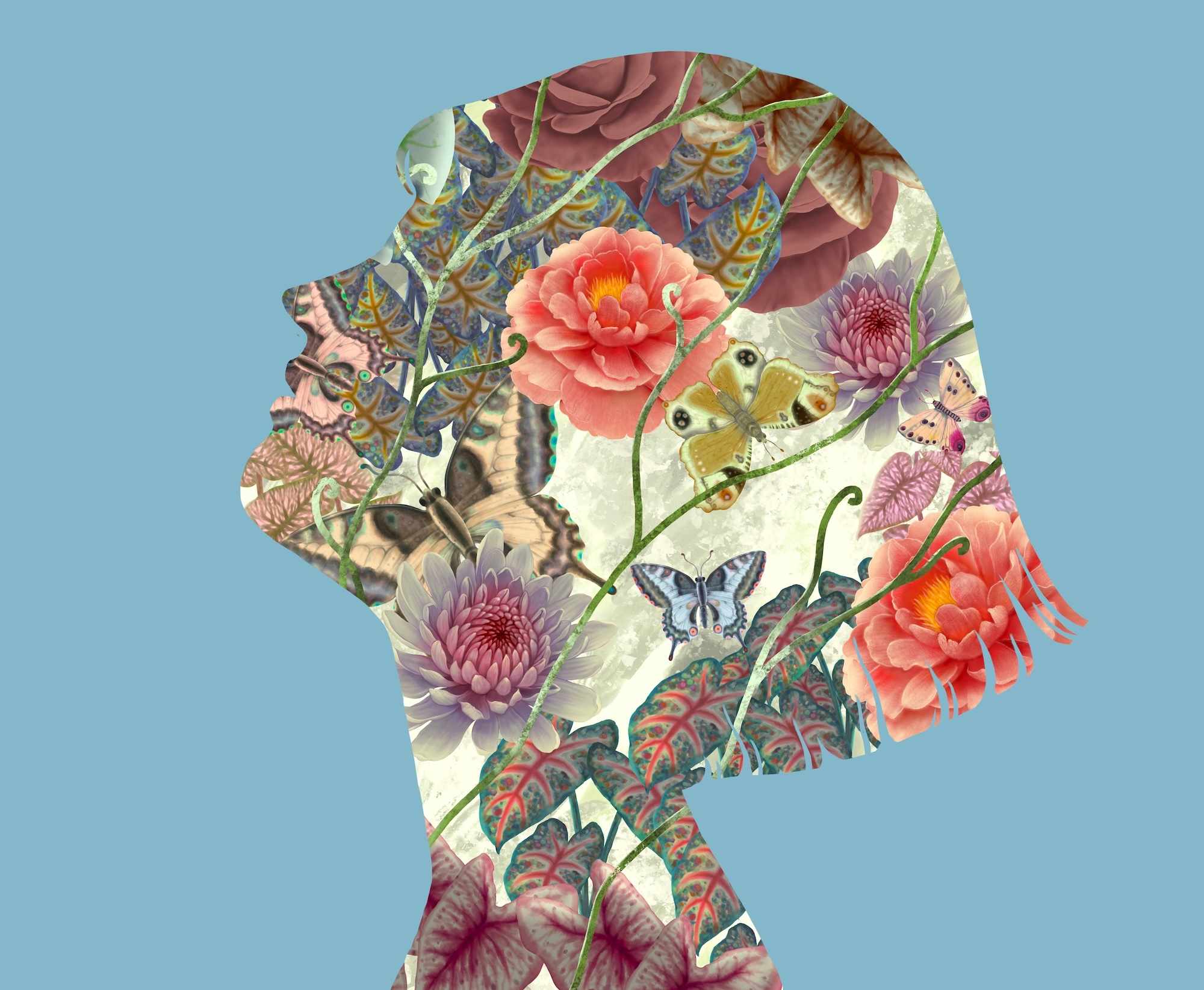
Image Description: A person’s side profile silhouette against a plain background. Inside of the silhouette are plants, flowers, and butterflies.
|
|
To be hopeful in bad times is not just foolishly romantic. It is based on the fact that human history is a history not only of cruelty, but also of compassion, sacrifice, courage, kindness.
What we choose to emphasize in this complex history will determine our lives. If we see only the worst, it destroys our capacity to do something. If we remember those times and places—and there are so many—where people have behaved magnificently, this gives us the energy to act, and at least the possibility of sending this spinning top of a world in a different direction.
And if we do act, in however small a way, we don’t have to wait for some grand utopian future. The future is an infinite succession of presents, and to live now as we think human beings should live, in defiance of all that is bad around us, is itself a marvelous victory.
— “Hopefulness in Bad Times,” excerpted from Howard Zinn’s memoir You Can’t Be Neutral on a Moving Train
Find the reflection on WorshipWeb.
|
|
|
|
|
|
|
Share your feedback on our newsletter. How are we doing? What would you like featured?
Email your thoughts to world@uua.org.
|
|
|
|
|
|
| UU World is the print and online magazine of the Unitarian Universalist Association, produced with support from the UUA’s member congregations through the Annual Program Fund. |
 |
 |
| © 2025 Unitarian Universalist Association. All rights reserved
24 Farnsworth St., Boston MA 02210 |
|
|
|
|